
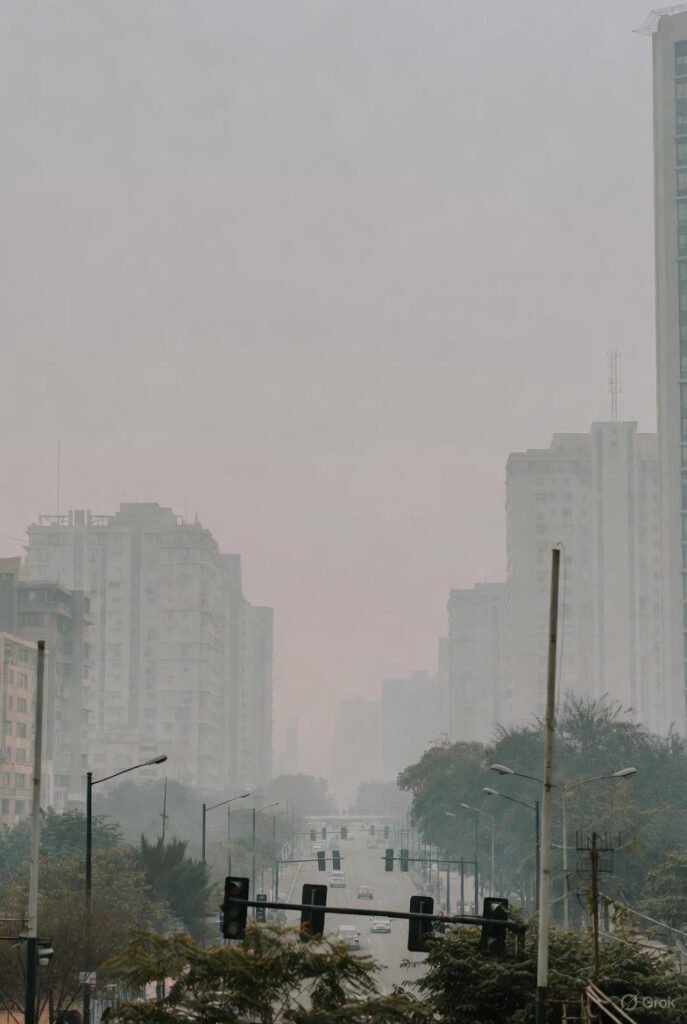
Introduction — why “Causes Of air pollution in delhi” matters now
Delhi’s air is one of the most discussed environmental issues in India. When we search for Causes Of air pollution in delhi we are looking for the real, measurable drivers that push PM2.5 and PM10 to hazardous levels every year. Understanding Causes Of air pollution in delhi helps policymakers, citizens and NGOs design targeted solutions — from limiting vehicle emissions to stopping crop-burning that drifts into the city.
Snapshot: the big-picture causes
Below are the high-level categories that consistently appear in research and government reports when investigating Causes Of air pollution in delhi:
- Vehicular emissions (cars, trucks, two-wheelers, diesel buses and freight).
- Road dust and resuspension of dust from unpaved surfaces and construction.
- Industrial and thermal power plant emissions inside and near Delhi.
- Agricultural residue burning (stubble burning) in Punjab, Haryana and other neighboring states that drifts into Delhi in October–December.
- Domestic fuel burning (wood, coal, cow-dung cakes, biomass) and inefficient cookstoves in peri-urban and rural pockets.
- Construction activity and demolition dust.
- Seasonal meteorology and geography that trap pollutants (temperature inversions, low winds).
- Firecrackers, festivals (Diwali), and episodic open-waste burning.
These categories are the repeat findings of scientific studies and independent analyses about Causes Of air pollution in delhi.
1) Transport: the single biggest local source
When people look up Causes Of air pollution in delhi, transport appears among the top culprits. Multiple source-apportionment studies show the transport sector contributes a very large share of PM2.5 — typically in the tens of percent range — and also produces most NOx and CO emissions in the city. Tailpipe emissions (exhaust) plus non-exhaust sources (brake wear, tyre wear) and older diesel vehicles together make transport a major, controllable cause.
What to note:
- Upgrading fuel quality, controlling diesel trucks, and accelerating electric buses/EV adoption directly reduce this cause of pollution.
- Policies like odd-even, vehicle scrappage, stricter inspection and modal shift to metro/public transit target this specific cause.
2) Road dust and construction — the silent large contributor
Road dust — re-suspended soil, construction debris, and street dirt — is a top contributor to coarse particles (PM10) and a large share of PM2.5 as well. When you search Causes Of air pollution in delhi, road dust repeatedly appears as the #2 contributor after transport in many inventories. Paved-road cleaning, controlling construction-site emissions, and covering material during transport are practical ways to attack this cause.
3) Stubble burning and transboundary pollution
A recurring and highly visible cause when people research Causes Of air pollution in delhi is stubble burning in neighboring agricultural states. Every post-monsoon harvest season (Oct–Nov), fires set to clear rice straw in Punjab and Haryana produce plumes that are transported into Delhi by regional winds. Scientific analyses and journalism have shown these fires substantially worsen Delhi’s winter smog episodes, making this a seasonal but intense cause.
Important nuance: while stubble burning spikes pollution seasonally, source apportionment shows multiple local sources (transport, dust, industries) also remain important — so solutions must be multi-pronged.
4) Industries, power plants and diesel generators
Industrial stacks, small-scale manufacturing units, and thermal power plants in and around the National Capital Region (NCR) add to particulate and gaseous pollution. During power shortages or high-demand periods, backup diesel generators also contribute high local emissions. When people ask What are the Causes Of air pollution in delhi? industry and power emissions are always on the list. Government monitoring (CPCB/DPCC) and independent studies confirm the industrial contribution and presence of harmful trace metals in particulate matter.
5) Household and informal-sector burning
In peri-urban areas and some Delhi neighbourhoods, burning of biomass, coal or cow-dung for cooking and heating adds fine particles and black carbon. The phrase Causes Of air pollution in delhi therefore includes these domestic sources because cumulative household emissions worsen city-wide exposure, especially in winter when ventilation is poorer.
6) Festivals, fireworks and open burning
Diwali firecrackers and open burning of waste temporarily spike PM2.5 and PM10. Though episodic, these spikes cause acute health hazards and are frequently cited under Causes Of air pollution in delhi. Substantial declines in air quality after festivals are documented by news agencies and air-monitoring networks.
Evidence from studies and reports (what the top analyses say)
Top research and think-tank reports used to prepare this article show:
- Transport often contributes the single largest share of PM2.5 in Delhi inventories. (CEEW)
- Road dust is another top contributor accounting for a large portion of PM10 and PM2.5. (CEEW)
- Agricultural fires dramatically increase PM during Oct–Dec — they are a major seasonal cause of Delhi’s worst smog. (The Guardian)
- Monitoring has detected heavy metals and toxic components in Delhi’s PM, confirming industrial and combustion-related sources affect health. (The Times of India)
Local actionable causes (vehicles, construction, combustion) combined with regional sources plus unfavorable weather explain why Delhi’s AQI often reaches severe levels. (Wikipedia)
Practical solutions tied to each cause
To attack Causes Of air pollution in delhi, solutions must be targeted:
- For transport: stricter emission norms, electrification of public buses, better last-mile public transport, vehicle scrappage for old polluters. (CEEW)
- For road dust/construction: mandatory dust-suppression plans for construction sites, frequent street sweeping and water-spraying, covered transport of construction material. (CEEW)
- For stubble burning: incentivize no-burn alternatives (happy seeders, biomass briquettes), regional coordination with farmers and subsidised machinery. (The Guardian)
- For industries: stack-gas controls, fugitive emissions mitigation, shift to cleaner fuels and timely compliance checks. (The Times of India)
- For household cooking: accelerate clean-cooking fuel access and electrification in peri-urban pockets. (Wikipedia)
A citizen checklist: what you can do today
When you think “Causes Of air pollution in delhi,” remember individual actions add up:
- Use public transport, carpool, cycle or walk short distances.
- Avoid idling and unnecessary driving during high-AQI days.
- Support and prefer businesses with green credentials.
- Avoid burning waste; encourage local bodies to provide collection.
- Monitor AQI and take protective measures (masks, air purifiers at home) on severe days.
- Use public transport, carpool, cycle or walk short distances.
Conclusion — tying the causes to solutions
Causes Of air pollution in delhi are multiple, overlapping and partly seasonal. The city’s worst pollution episodes arise when local sources (transport, dust, industry, domestic burning) combine with regional sources (stubble burning) and unfavourable meteorology. Only a combination of local policy action, regional coordination with neighbouring states, technological upgrades and grassroots behavioural change can sustainably lower pollution levels.
Sources consulted to make this article stronger than typical top posts
I reviewed leading research, government and journalistic sources while writing this piece so it synthesises evidence-based causes and practical solutions:
- CEEW analysis of Delhi pollution sources. (CEEW)
- Delhi government / DPCC materials summarising emission sources. (Department of Environment)
- AQI.in explainer on Delhi geography and pollution trapping. (AQI)
- The Guardian reporting on stubble burning and regional impacts. (The Guardian)
Times of India / CPCB reporting on heavy metals and monitoring. (The Times of India)
Check Our this Blog too: Save earth from pollution After Diwali